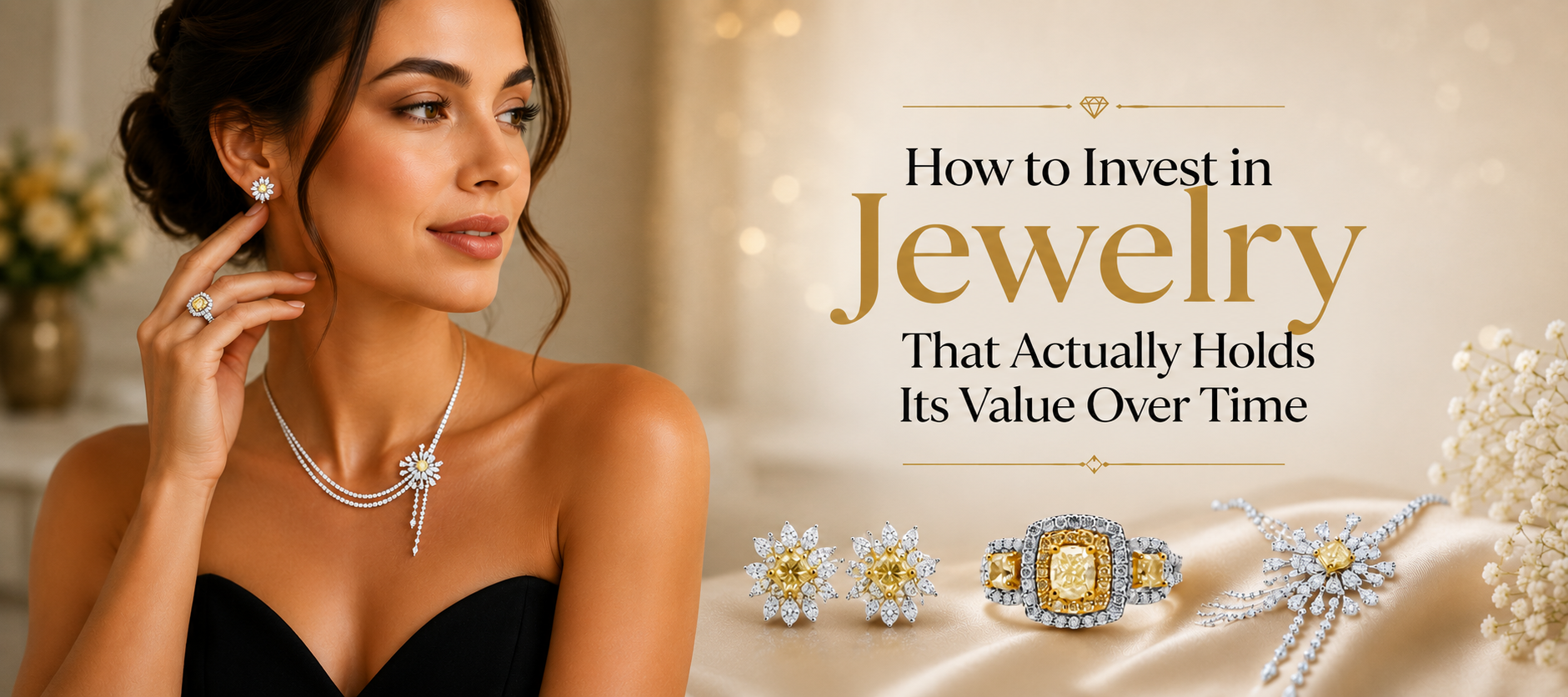
How to Invest in Jewelry That Actually Holds Its Value Over Time
Most purchases lose value the moment you make them. A new car depreciates the second it leaves the lot. Technology becomes obsolete within a year. Clothing trends cycle in and out of relevance almost seasonally. But fine jewelry — the right kind, bought with the right knowledge — has historically occupied a different category entirely. It is one of the few things you can wear, love, and pass down, while the underlying asset quietly holds its worth across decades.
That said, not all jewelry is created equal when it comes to long-term value. The difference between a piece that appreciates and one that quietly loses its worth often comes down to just a handful of well-understood factors. This guide covers all of them — honestly, practically, and without the sales language.
Why Fine Jewelry Can Be a Legitimate Store of Value
The global jewelry market was valued at approximately $350 billion in 2023, with fine jewelry representing the largest and most stable segment. Unlike fashion accessories or costume pieces, fine jewelry is built on materials that carry intrinsic value independent of taste or trend: precious metals and natural gemstones.
Gold — the foundation of most fine jewelry — has served as a store of value for centuries. Its price fluctuates with global markets, but its long-term trajectory is consistently upward during periods of economic uncertainty, which is precisely when other assets like stocks and currencies lose purchasing power. Owning gold in the form of well-crafted jewelry means you hold a tangible asset that is simultaneously portable, wearable, and capable of being liquidated when needed.
Natural gemstones add another layer. Fine gemstones such as rubies, sapphires, and emeralds have increased in value by approximately 5 to 8 percent annually since 1995 according to industry data, even accounting for economic downturns. Their scarcity, combined with consistent collector and gifting demand, makes them one of the more stable alternative assets in the luxury category.
However — and this is important — approaching jewelry as a pure financial instrument misses the point. The most honest framing is this: treat fine jewelry as a wearable asset. Buy it because it is beautiful, meaningful, and crafted to last. The value retention is the bonus, not the primary reason.
The Single Most Important Factor: Metal Purity
If there is one thing that separates value-retaining jewelry from pieces that depreciate quickly, it is the purity of the metal used. This is non-negotiable.
Gold is measured in karats. Pure gold is 24 karats, but it is too soft for most jewelry. The practical sweet spots for jewelry investment in the United States are 14K and 18K gold. A 14K piece contains 58.3% pure gold, making it durable for daily wear while carrying real intrinsic value. An 18K piece contains 75% pure gold — richer in color, slightly softer, and preferred for heirloom and fine jewelry that will be worn carefully rather than every day.
Know Your Hallmarks: When purchasing gold jewelry in the U.S., look for karat stamps — "585" for 14K and "750" for 18K — usually found on the clasp or inner band. These indicate the percentage of pure gold content and are the baseline for any resale or appraisal conversation.
Anything below 14K contains too little gold to serve as a reliable store of value and will likely behave more like fashion jewelry over time. Silver, while widely available, is also generally not recommended as a value-holding metal due to its lower price point and susceptibility to tarnishing. Gold remains the gold standard — literally.
Natural Gemstones vs. Lab-Grown: What You Need to Know Before Buying
This is where many buyers, particularly in the American market, are caught off guard. Lab-grown diamonds and gemstones are real stones — chemically identical to their natural counterparts. They are also significantly less expensive, and therein lies the investment challenge.
Lab-grown diamond prices have fallen approximately 74% from 2020 to 2025, as production costs dropped and supply expanded rapidly. A lab-grown stone purchased five years ago is worth a fraction of what it cost. Natural diamond prices have also softened recently — down about 26% from 2023 to early 2025 — but they carry a fundamentally different resale dynamic because they cannot be infinitely reproduced.
For genuine jewelry investment, natural gemstones with proper certification are far more reliable. The most respected certifying bodies in the U.S. include the Gemological Institute of America (GIA), the American Gem Society (AGS), and the International Gemological Institute (IGI). A certified natural gemstone with documented provenance — such as a Kashmir sapphire, a Colombian emerald, or an untreated Burmese ruby — has a clear, verifiable value that a buyer can authenticate and a resale market can price accurately.
Gemstone | Investment Appeal | Best Quality Markers |
Natural Diamond | High — especially 2+ carats, excellent grading | GIA certified, high color/clarity grades |
Ruby | Very High — rarest of the big three | Untreated, Burmese origin, deep red color |
Sapphire | High — broad collector demand | Kashmir or Ceylon origin, untreated, vivid blue |
Emerald | High — especially Colombian origin | Minimal treatment, GIA certificate, deep saturation |
Natural Peridot | Moderate — growing collector interest | Deep olive-green, solid gold setting |
Lab-Grown Diamond | Low for resale — declining market prices | Beautiful for wear, not recommended for investment |
Craftsmanship: The Hidden Multiplier of Long-Term Value
Material quality creates a floor for a piece's value. Craftsmanship determines how high above that floor the piece can go.
Handcrafted jewelry — pieces made with skilled human technique rather than mass-production machinery — consistently commands a premium on both primary and secondary markets. The reason is straightforward: handcrafted pieces are inherently fewer in number, carry the signature of individual skill, and typically use better-quality raw materials because the process demands it. Mass-produced jewelry, on the other hand, prioritizes uniformity and scale over depth of craft, and buyers in resale markets recognize the difference immediately.
When evaluating craftsmanship, look at the following: the precision of stone settings (stones should sit securely with no movement), the finish of metal surfaces (no pitting, rough edges, or visible tool marks), the weight of the piece relative to its size (heavier typically means more solid metal rather than hollow construction), and the coherence of the design (proportions that feel intentional rather than formula-driven).
Limited-edition and design-driven collections also carry a distinct advantage. When a collection is finite by intent — not because production stopped, but because it was always meant to be exclusive — its scarcity reinforces value in a way that open-edition pieces cannot replicate.
Timeless Design vs. Trendy Pieces — Knowing the Difference
What Makes a Jewelry Design Truly Timeless?
Timeless jewelry design is not boring — it is simply built to remain relevant across decades rather than seasons. Classic silhouettes — solitaire settings, tennis bracelets, elegant pendants, hoop earrings — have demonstrated consistent demand for generations because they work across age groups, style evolutions, and cultural shifts. A gold diamond necklace in a clean, refined setting, for example, will be as wearable in fifteen years as it is today — and its resale market will reflect that durability.
What to Avoid if Value Retention Matters
Trend-driven jewelry — pieces that spike in popularity for a season and then feel dated — rarely holds its purchase value. The paperclip chain trend, the layered beaded bracelet moment, chunky nameplate necklaces: these may be enjoyable to wear, but they typically cannot be resold at anything near their original retail price because demand collapses once the trend passes.
Honest Advice: Heavily personalized pieces — initials, names, specific dates engraved prominently — are significantly harder to resell because their sentimental value is specific to the original owner. If investment value matters to you, keep personalization subtle or confined to the clasp rather than the face of the piece.
The Role of Documentation and Provenance in Jewelry Value
One of the most consistently overlooked factors in jewelry investment is documentation. In the fine jewelry world, provenance — the verified history of a piece, including its materials, origin, and maker — can be the single deciding factor between a quick resale at a strong price and a piece that sits unsold because no buyer can verify what they are purchasing.
When you buy fine jewelry, keep everything: the original receipt, any gemstone certificates (GIA, AGS, IGI), appraisals, photographs of the piece, and any brand documentation that came with it. These records allow future buyers, auction houses, or insurance appraisers to establish value confidently. A natural diamond ring with a GIA certificate and its original purchase documentation from a reputable jeweler is a fundamentally easier asset to liquidate than an identical-looking ring with no paperwork.
Getting a professional appraisal every three to five years is also worthwhile for any significant piece. Appraisal values reflect current market conditions, and updated appraisals also ensure your jewelry insurance coverage keeps pace with appreciation.
Gold Jewelry as a Wearable Financial Asset — The Bigger Picture
Among all precious metals, gold has the deepest history as a wealth preservation tool. Central banks worldwide hold gold as a reserve asset precisely because it retains purchasing power when paper currencies experience volatility. When you own jewelry investment pieces crafted in solid 14K or 18K gold, you hold a share of that same intrinsic value — just in a far more beautiful form.
Gold's value has not simply held steady over time — it has meaningfully appreciated. Gold prices have risen substantially over the past two decades, meaning even the metal component of fine gold jewelry purchased years ago has grown in raw material value, independent of the craftsmanship premium.
This is part of why solid gold jewelry — as opposed to gold-filled, gold-plated, or vermeil — matters so much for investment purposes. Gold-plated pieces have a microscopic layer of gold over a base metal; once that layer wears away, the underlying material has no meaningful value. Solid gold pieces, by contrast, are gold throughout, and their metal value is real and calculable regardless of aesthetic trends.
Symbolic and Meaningful Jewelry — Why Emotional Value Is Not the Opposite of Financial Value
There is a persistent idea in financial circles that emotional attachment to an asset is a liability — that it clouds judgment and prevents rational decision-making. In the fine jewelry market, this view misses something important.
Jewelry that carries personal or symbolic meaning — birthstones, zodiac symbols, anniversary pieces, heirlooms — tends to be worn more consistently, cared for more carefully, and preserved across generations. A gold zodiac necklace crafted in solid gold is not just a beautiful accessory — it is a piece a person connects to deeply, which means it gets stored properly, insured, and passed down rather than casually discarded or lost in a drawer.
Generational transfer of jewelry is also one of the most reliable ways fine pieces appreciate over time. A piece that passes from one generation to the next accumulates both sentimental significance and historical rarity — and in estate and vintage markets, that combination commands real premiums. The most enduring jewelry collections are built around pieces that people are proud to own and reluctant to part with.
Practical Steps for Building a Value-Holding Fine Jewelry Collection
Start With the Metal Foundation
Begin any collection with solid gold pieces — rings, necklaces, or bracelets in 14K or 18K gold. These form the foundation because their value is anchored in the metal itself, regardless of design trend. A gold gemstone jewelry piece in solid gold with a natural stone already clears two of the highest value-retention bars simultaneously.
Choose Natural Stones with Certification
Whenever a significant gemstone is involved, insist on documentation. A GIA certificate or equivalent third-party grading report transforms a beautiful stone into a verifiable asset. Ask the jeweler directly: Is this stone natural or lab-grown? Has it been treated? Does it come with a certificate?
Prioritize Handcrafted Over Mass-Produced
Seek out jewelers and brands whose pieces are handcrafted in limited quantities. Limited availability, combined with genuine craftsmanship, creates the conditions for value appreciation that mass-produced jewelry simply cannot replicate. A gold peridot necklace handcrafted in solid gold, for instance, carries both the intrinsic value of the metal and the premium of skilled, artisanal work — a combination that mass-market alternatives cannot offer.
Maintain, Insure, and Document
Value retention requires active stewardship. Store pieces properly, have them professionally cleaned annually, keep all original documentation, and insure them with a jewelry-specific policy that reflects current appraised value. Neglected jewelry — even if made of high-quality materials — loses resale value through damage, wear, and the inability to verify what it is.
Think in Decades, Not Seasons
The mindset shift that separates a thoughtful jewelry collector from an impulse buyer is the willingness to think long-term. A piece of gold diamond jewelry purchased today with the intention of wearing it for twenty years — and potentially passing it to the next generation — is a fundamentally different purchase than buying whatever is trending in this quarter's fashion cycle. The former builds a collection. The latter builds a donation pile.
The Bottom Line on Buying Jewelry That Lasts
Fine jewelry that holds its value is not mysterious or inaccessible. It follows consistent, well-understood principles: solid gold at 14K or higher, natural certified gemstones, handcrafted quality, timeless design, and proper documentation and care. Avoid mass-produced pieces, trend-driven styles, lab-grown stones if resale matters, and anything without clear provenance.
Most importantly, buy pieces you genuinely love. The best jewelry investment is one you wear consistently, care for properly, and feel proud to pass on. At Rekiya Designs, every piece is handcrafted in solid gold with natural gemstones — built not for a season, but for a lifetime.
Explore the full collection at rekiyadesigns.com.
Frequently Asked Questions
Is jewelry a good long-term investment?
Fine jewelry can be a meaningful long-term store of value, but it is best approached as a wearable asset rather than a purely financial instrument. Pieces made from high-karat solid gold, natural diamonds, and certified rare gemstones — with strong craftsmanship and timeless design — have the best track record for holding or appreciating in value over time. Mass-produced, trend-driven, or fashion jewelry typically loses value quickly and should not be treated as investment-grade.
What karat of gold holds value best in jewelry?
For jewelry investment in the United States, 14K and 18K gold are the most practical choices. A 14K piece contains 58.3% pure gold — durable for everyday wear and carrying real intrinsic value. An 18K piece contains 75% pure gold, preferred for heirloom-quality fine jewelry. Both carry the stamp hallmarks "585" and "750" respectively, which any appraiser or resale buyer will look for first.
Do natural gemstones hold value better than lab-grown stones?
Generally, yes — and significantly so. Natural gemstones carry value grounded in their finite supply and geological rarity. Lab-grown diamond prices have fallen approximately 74% between 2020 and 2025 as production scaled and supply expanded, making resale value difficult to predict. For investment purposes, certified natural stones — particularly rubies, sapphires, and emeralds with GIA or equivalent documentation — hold their worth far more reliably.
How do I protect and maintain the value of my fine jewelry?
Consistent care directly impacts resale value. Store each piece separately in a soft-lined pouch or box to prevent scratching. Have pieces professionally cleaned and inspected at least once annually. Keep all original documentation — certificates, receipts, and appraisals — as these records are essential for any future resale or estate valuation. Insure high-value pieces with a specialized jewelry policy, and update appraisals every three to five years to reflect current market values.
What types of jewelry should I avoid buying as an investment?
Fashion and costume jewelry made with base metals loses value almost immediately. Trend-driven styles — popular for a season but not timeless — rarely hold their worth once the trend fades. Heavily personalized pieces such as prominent monograms or engraved names are significantly harder to resell. Lab-grown diamonds, while ethically appealing, have seen sharp price declines in recent years. Any piece sold without documentation, gemstone certification, or provenance is also difficult to appraise and resell at fair market value.
-
How to Find a Reliable Wholesale Jewelry Supplier in the USA: A Retailer’s Guide
September 29th, 2026 -
 August 22nd, 2026
 -
 August 22nd, 2026
 -
 July 9th, 2026