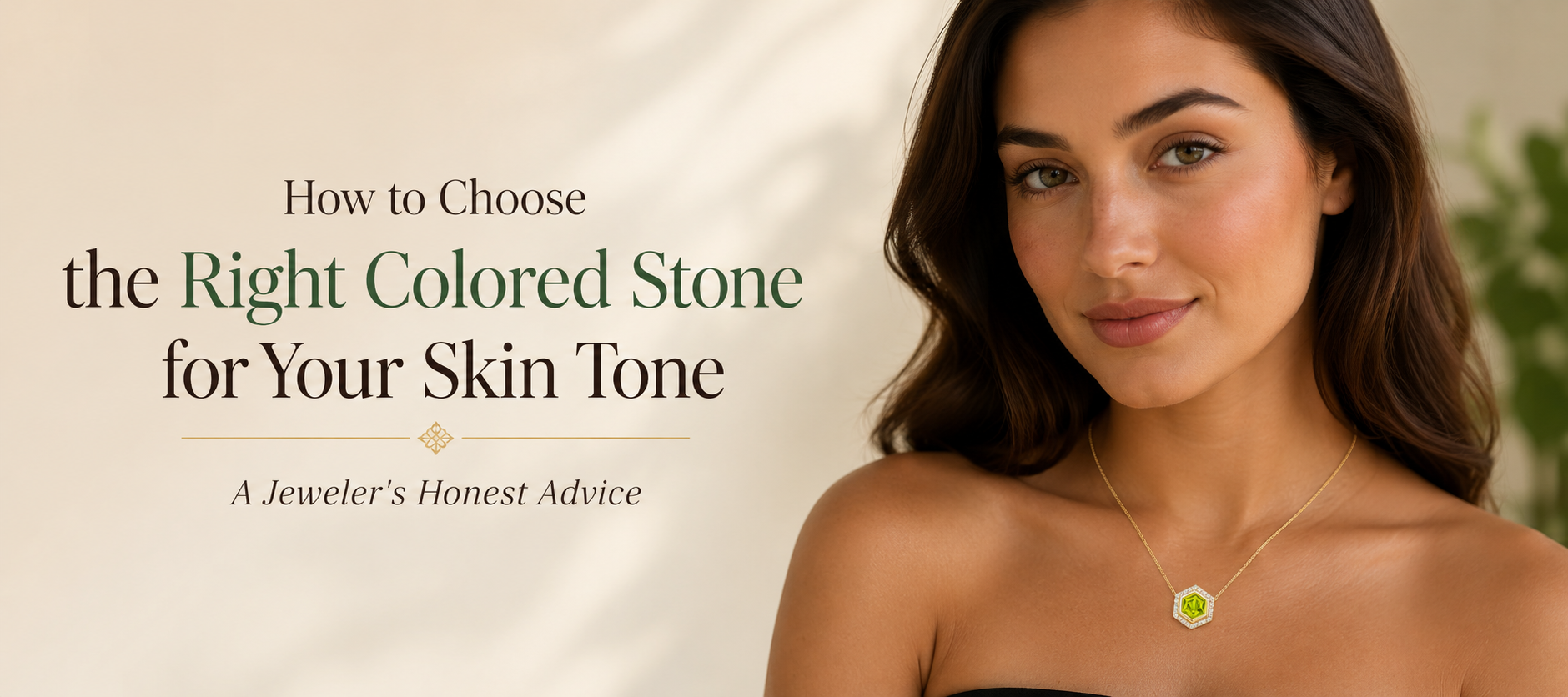
How to Choose the Right Colored Stone for Your Skin Tone — A Jeweler's Honest Advice
How to Choose the Perfect Colored Stone for Your Skin Tone
Walk into any fine jewelry store in New York and you will see them — rows of colored gemstones in every hue imaginable, from deep ocean sapphires to sun-warmed citrine and lush green emeralds. Each one is beautiful on its own. But put the wrong stone against your skin, and something feels slightly off, even if you cannot immediately say why. Put the right one on, and it lights you up.
That is the quiet power of pairing gemstones intentionally with your skin tone. It is not a rigid rule system. It is more like understanding a language — once you learn the basics, every jewelry decision becomes more confident, more personal, and more beautiful.
This guide breaks it all down the way a jeweler actually thinks about it: starting with how to read your skin tone, then walking through which gemstone colors work with each undertone category, and ending with the honest nuances that most style blogs skip.
Why Does Skin Tone Matter When Choosing Gemstone Jewelry?
Skin tone affects how colors reflect and absorb around your face and hands. Your skin has a surface color — the overall lightness or darkness — and an underlying undertone, which is the subtle hue beneath that surface. Undertone is the more important of the two when selecting gemstones, because it does not change with sun exposure, seasons, or self-tanner.
Undertones fall into three main categories: warm (yellow, peachy, golden), cool (pink, red, bluish), and neutral (a balanced mix of both). There is also olive — a complex undertone with greenish or grayish cast that can lean either warm or neutral. Understanding which category you fall into is the first step toward finding the best colored stones for skin tone that genuinely flatters your natural complexion.
Quick Tip — The Vein Test: Look at the veins on the inside of your wrist in natural daylight. Green veins suggest warm undertones. Blue or purple veins point to cool undertones. Blue-green veins indicate a neutral undertone.
Reading the Quick-Reference Guide Before You Shop
Before diving into each skin tone in detail, here is a high-level reference table that jewelers often use as a starting point. Keep in mind these are starting points, not absolute rules.
Undertone | Best Metal | Flattering Gemstone Colors | Gemstones to Consider |
Warm | Yellow Gold, Rose Gold | Earthy, golden, amber, green | Citrine, Peridot, Garnet, Amber, Green Tourmaline |
Cool | White Gold, Platinum, Silver | Blue, purple, icy green, deep red | Sapphire, Amethyst, Emerald, Ruby, Aquamarine |
Neutral | All metals work | Versatile — most hues flatter | Diamond, Morganite, Pink Sapphire, Garnet, Pearl |
Olive | Yellow Gold, Rose Gold | Rich, saturated, deep tones | Emerald, Ruby, Garnet, Turquoise, Citrine |
Deep / Dark | Yellow Gold, Rose Gold, White Gold | Bold, vibrant — all colors work | Diamonds, Ruby, Sapphire, Emerald, Opal, Turquoise |
Gemstone Pairings for Warm Skin Undertones
What Warm Undertones Actually Look Like
Warm undertones manifest as golden, peachy, or yellowish hues beneath the skin's surface. Your complexion might range from fair ivory to rich caramel — what unites warm-toned individuals is that golden glow, not a specific shade of skin. In natural light, your veins appear more green than blue.
The Gemstones That Elevate Warm Skin
Warm skin tones are best paired with gemstones that echo and enhance their natural golden quality. Peridot is one of the most underrated choices for warm complexions — its bright, lime-to-olive green tone sits directly in the warm color family and adds a luminous pop without competing with your skin. A gold peridot necklace set in yellow gold, for instance, creates the kind of harmonious warmth that makes other people ask, "What is that you are wearing?"
Citrine, with its sunny yellow and orange tones, is another excellent choice — it brightens warm complexions the way yellow gold does. Amber, garnet in its pomegranate-red form, and warm-hued green tourmaline are also reliably flattering. These stones do not fight your skin; they amplify it.
What warm-toned individuals should generally avoid: overly icy or pale pastel stones like aquamarine or light lavender amethyst, which can wash out a warm complexion by pulling the color in the wrong direction.
Gemstone Pairings for Cool Skin Undertones
What Cool Undertones Actually Look Like
Cool undertones appear as pink, rosy, or bluish hues in the skin. Fair-skinned individuals with cool undertones often notice they turn pink in the sun rather than golden. Medium and deeper skin tones with cool undertones tend to carry a subtle plum or blue-red cast. In natural light, the veins on the wrist appear distinctly blue or purple.
The Gemstones That Complement Cool Skin
The best colored stones for skin tone that leans cool are those in the blue, purple, icy green, and deep red family. Sapphire — particularly in deep royal blue — creates a striking, cohesive look against cool-toned skin because both share that blue-adjacent quality. Amethyst in deep violet enhances the rosy undertones in fair-to-medium cool skin beautifully.
Emerald is an interesting case: its deep, saturated green works for both cool and olive undertones because the stone's depth creates contrast rather than competing. Aquamarine, with its pale blue-green hue, is especially flattering on fair, cool complexions. Ruby — one of the boldest colored gemstones — creates a dramatic, elegant contrast against cool skin when set in white gold or platinum.
White gold and platinum settings amplify the effect of these stones. Yellow gold can sometimes feel warm against cool skin, though this is a personal preference many women experiment with successfully.
Gemstone Pairings for Neutral Skin Undertones
The Versatile Middle Ground
Neutral undertones are what they sound like — skin that carries neither a distinctly warm nor distinctly cool cast. If you hold up warm and cool jewelry side by side and both look equally good on you, you are likely neutral. This is the most versatile undertone category for jewelry, because it opens up almost the entire spectrum of gemstone options.
That said, neutrals still benefit from intentional choices. Diamonds are the most universally flattering stone, and they look especially refined in fine gold settings on neutral skin. Morganite — a peachy-pink beryl — adds a delicate femininity that complements neutral skin's balance. Pink sapphire, garnets, and champagne diamonds are all excellent choices as well.
Because neutral-toned individuals have such flexibility, the emphasis shifts to other factors: the occasion, the metal tone, and the emotional meaning behind the stone. For someone drawn to zodiac-inspired fine jewelry, a gold zodiac necklace set with birthstone elements becomes a natural expression of personal identity rather than just a color decision.
Gemstone Pairings for Olive and Deep Skin Tones
Olive Skin — Rich and Earthy Works Best
Olive skin tones carry a greenish or grayish-golden undertone that sits between warm and neutral. This complexion is highly adaptable and can carry a wide range of gemstone hues, though the most flattering tend to be those with rich saturation and depth. Avoid overly bright or pastel stones — they can appear washed out rather than vivid against olive skin.
Emeralds, deep garnets, turquoise, and citrine in its deeper orange-yellow range all work beautifully. Yellow gold and rose gold settings add warmth that enhances the skin's natural richness.
Deep and Dark Skin Tones — Bold Stones Shine
Deep skin tones are among the most spectacular backdrops for colored gemstones. The contrast between rich, melanin-blessed skin and a bold, vibrant stone creates a visual effect that is simply stunning. Almost every gemstone family has something to offer — rubies, sapphires, emeralds, opals, diamonds, and turquoise all pop with extraordinary brilliance against deep skin.
The one category to approach thoughtfully is very pale pastel gemstones, which can sometimes appear subtle to the point of fading against a deep complexion. Go bold, go saturated, and choose settings — particularly yellow gold — that frame the stone with equal presence.
What No One Tells You About Birthstones and Skin Tone
Many Americans choose gemstones by birthstone rather than by skin tone — and that is a beautiful, emotionally meaningful approach. But here is the honest jeweler's truth: not every birthstone is automatically flattering on every complexion. The good news is that with fine craftsmanship and the right metal setting, most birthstones can be made to work for most skin tones.
The solution? Pay attention to the specific shade of the stone, not just the gem category. An emerald, for example, comes in light to very dark green. A lighter emerald suits cool and fair complexions; a deeper, more saturated emerald flatters olive and deep skin tones. A citrine might range from pale lemon to a deep cognac — the deeper shade works more broadly than the pale version. When shopping for birthstone jewelry, ask to see multiple stones in varying depths before deciding.
This nuance is especially important for those investing in fine, solid-gold pieces meant to be worn daily for years — the kind of intentional jewelry that gold gemstone jewelry represents when it is truly crafted rather than mass-produced.
The Role of Gold in Making Gemstone Colors Pop
When jewelers talk about colored stone selection, we would be leaving out half the story if we did not address the metal setting. The gold you choose interacts with both the gemstone and your skin simultaneously — it is the bridge between the two.
Yellow gold is the warmest metal and enhances the vibrancy of warm-toned gemstones and warm skin undertones. It makes peridot greener, citrine sunnier, and garnet richer. White gold and platinum carry a cooler, more neutral tone that lets cool gemstones — sapphire, amethyst, emerald, diamond — take center stage without competing interference. Rose gold sits in a flattering middle ground that softens cool stones and adds a romantic warmth to neutral gemstone choices.
For someone building a fine jewelry wardrobe, the strategic approach is to choose a gold tone that complements your undertone first, then select gemstones that harmonize within that framework. A gold diamond necklace in white gold, for example, is one of the most universally flattering combinations because the colorless diamond works with everything while the white metal adds the appropriate cool contrast for lighter or cool-toned complexions.
Practical Shopping Tips From a Jeweler's Perspective
Test in Natural Light Whenever Possible
Jewelry store lighting is designed to make every stone look extraordinary — it is warm, flattering, and intense. Natural daylight is your most reliable test environment. If you are shopping online, order pieces with a return policy and test them in natural morning or afternoon light at home before committing.
Photograph the Piece Against Your Bare Wrist
Before you decide on a ring or bracelet, photograph it against the inside of your bare wrist — the area where your skin tone is most accurately represented. Zoom in on the photo and look at how the stone's color interacts with your undertone. Your eye will tell you quickly whether the pairing is harmonious or discordant.
Consider the Occasion and Outfit Context
A deeply saturated ruby red might be perfect for evening wear but feel slightly heavy for casual, everyday stacking. Conversely, a petite peridot pendant might be ideal for daily office wear but underwhelming at a formal event. Think about the context in which you will wear the piece most often, and let that guide both the stone intensity and the setting scale.
Do Not Ignore the Symbolic Dimension
Fine gemstone jewelry is never purely aesthetic. Birthstones, zodiac stones, and gemstones tied to meaning and memory carry emotional weight that goes beyond color theory. A piece of gold diamond jewelry chosen because it marks a milestone will always feel right, regardless of the technical undertone chart. The best jewelry is the kind that feels like yours — visually and emotionally.
Gemstones That Flatter Every Skin Tone
There is a category of gemstones that experienced jewelers call "universally flattering" — stones that work across cool, warm, neutral, and deep complexions without any adjustment needed. If you are ever unsure, these are your safest starting points:
Diamonds — Their colorless brilliance catches and reflects whatever light surrounds them, which means they look stunning on every complexion. A diamond does not absorb color from your skin; it simply amplifies luminosity.
Opals — Opals are one of nature's most spectacular optical phenomena. Their multi-tonal iridescence — shifting between blues, greens, pinks, and golds — means they inherently carry something complementary for every skin tone.
Emeralds — While emeralds lean slightly more toward cool and olive tones in their brightest forms, deeply saturated emeralds in yellow gold settings have a warm, earthy richness that flatters a wide range. Their symbolic significance as stones of wisdom, growth, and renewal also makes them perennial favorites in meaningful fine jewelry.
Pearls (cream and white) — Cream pearls in particular have a soft, luminous quality that enhances without overpowering any complexion. They are timeless precisely because they adapt.
The Honest Bottom Line
Gemstone and skin tone pairing is a guide, not a rule. The goal is to feel more informed, not more restricted. Once you understand which stone families tend to harmonize with your complexion, you can shop with intention rather than impulse — and the pieces you select will feel more cohesive, more personal, and more beautiful in your everyday life.
At Rekiya Designs, every piece is handcrafted in solid 14K or 18K gold with natural gemstones selected for quality, character, and symbolic meaning. Whether you are drawn to a birthstone collection, a zodiac-inspired design, or simply a stunning everyday gemstone piece, the foundation is the same: jewelry that is made to be worn, loved, and remembered.
Explore the full collection at rekiyadesigns.com and discover which stone speaks to you.
Frequently Asked Questions
How do I know if I have a warm or cool skin undertone?
The easiest method is the vein test. Look at the veins on the inside of your wrist under natural light. If they appear greenish, you likely have warm undertones. If they look blue or purple, you have cool undertones. If they appear blue-green, your undertone is neutral. You can also hold a plain white sheet of paper near your face — if your skin looks yellow or peachy against the white, you are warm-toned; if it looks rosy or pink, you are cool-toned.
What colored gemstones look best on warm skin tones?
Warm skin tones pair beautifully with gemstones in earthy, golden, and amber hues. Peridot, citrine, garnet, green tourmaline, amber, and yellow topaz are among the most flattering choices. These stones echo the golden and peachy warmth in your skin rather than competing with it. Yellow gold settings amplify the effect even further, creating a harmonious, sun-kissed look.
Can I wear colored gemstone jewelry every day, or only for special occasions?
Many colored gemstones are durable enough for daily wear. Sapphires, rubies, emeralds, and garnets all rank high on the Mohs hardness scale and hold up beautifully with regular use. The key is choosing fine jewelry settings — such as solid 14K or 18K gold — that protect the stone. Petite, stackable designs crafted in solid gold are especially well-suited for everyday luxury wear.
Does the color of gold matter when pairing gemstones with my skin tone?
Yes, the metal color matters just as much as the gemstone itself. Yellow gold enhances warm undertones, white gold and platinum complement cool undertones, and rose gold is broadly flattering for neutral and warm skin tones. Pairing the right metal tone with the right gemstone creates a cohesive look that elevates your natural complexion rather than competing with it.
What gemstones are universally flattering on all skin tones?
Diamonds are the most universally flattering gemstone because their colorless brilliance amplifies light on every skin tone without absorbing color. Cream and white pearls are also a safe, classic choice. Opals, with their multi-tonal iridescence, work across a wide range of complexions. Among colored stones, deeply saturated emeralds are widely flattering because their rich green sits in a neutral enough position on the color spectrum to complement both warm and cool undertones when set thoughtfully in gold.
-
How to Find a Reliable Wholesale Jewelry Supplier in the USA: A Retailer’s Guide
September 29th, 2026 -
 August 22nd, 2026
 -
 August 22nd, 2026
 -
 July 9th, 2026