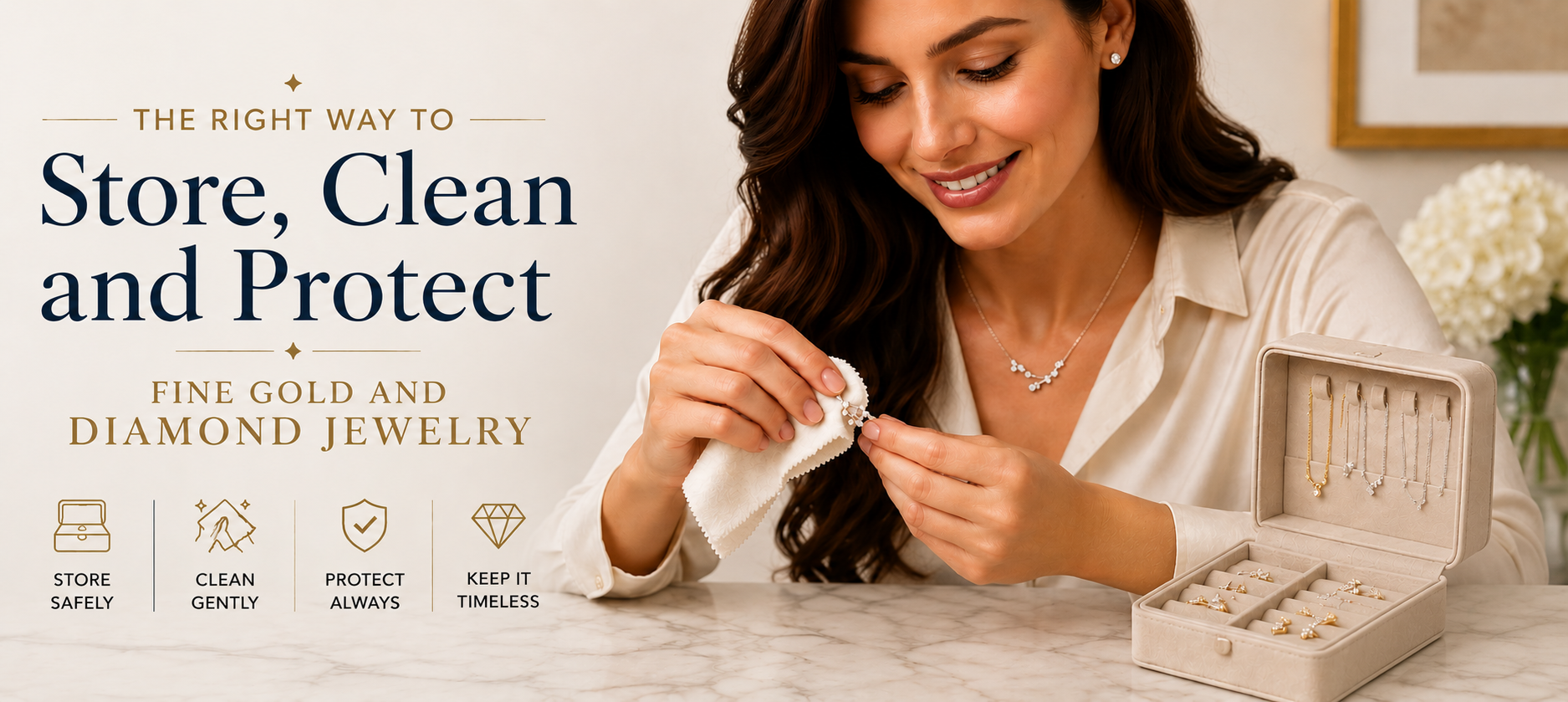
The Right Way to Store, Clean and Protect Fine Gold and Diamond Jewelry
Fine gold and diamond jewelry is not just an accessory — it is an heirloom in the making. Whether it's a treasured diamond engagement ring, a zodiac constellation necklace, or a delicate everyday band, the way you care for your pieces determines how brilliantly they age.
Why Proper Jewelry Care Matters More Than You Think
Gold and diamond jewelry are durable, but they are not invincible. Even 14K and 18K solid gold — the standards used in fine jewelry — can develop surface scratches, dulling, and discoloration when exposed to chemicals, moisture, and improper storage. Natural diamonds, while the hardest mineral on earth, collect grease and oils quickly, which reduces their signature sparkle. Gemstones like emeralds, tourmalines, and enamel-set pieces require even more thoughtful handling.
The good news? With a consistent care routine, your fine jewelry can look as stunning in ten years as it does on the day you first wear it. This guide covers everything — from safe at-home cleaning to professional servicing schedules — so your collection remains as beautiful as the moments it represents.
How to Clean Fine Jewelry at Home — The Safe, Proven Method
Knowing how to clean fine jewelry correctly is the single most impactful thing you can do to preserve its beauty. The process is simple, but the details matter. Here is a step-by-step approach used by professional jewelers — adapted for safe home use.
1. Gather the Right Supplies
You need a small bowl, lukewarm water (not hot — thermal shock can loosen settings), a few drops of mild dish soap (free of bleach, ammonia, or harsh degreasers), and a soft-bristle toothbrush — ideally a new children's brush with extra-soft bristles.
2. Soak the Piece for 15–20 Minutes
Place your gold or diamond jewelry in the soapy water and allow it to soak. This loosens accumulated oils, lotions, and debris from the metal surface and the underside of gemstone settings without any abrasive contact.
3. Gently Scrub with the Soft Brush
Use light, circular strokes to work the brush around the setting, under the stone, and along the band. Pay special attention to areas where skin contact is highest — the inside of rings and the underside of stone settings — as these accumulate the most residue. Never scrub with force; let the soft bristles do the work.
4. Rinse Under Lukewarm Running Water
Hold the piece over a bowl (not directly over an open drain) and rinse thoroughly. Any remaining soap left in settings can create a dull film. Make sure water runs through and around every part of the piece.
5. Dry Completely Before Storing
Pat the piece gently with a clean, lint-free cloth — a microfiber jewelry cloth is ideal. Allow it to air-dry completely on a soft surface for at least 15 minutes before storing or wearing. Storing damp jewelry in a closed box promotes tarnish and, in some cases, microscopic moisture damage to settings.
Frequency Tip: For pieces worn daily — like a delicate petite ring or a gold diamond necklace — clean every two to three weeks. For occasional-wear pieces, once a month is sufficient to maintain shine and prevent build-up.
What to Avoid When Caring for Gold and Diamond Pieces
Understanding what not to do is just as important as knowing the right technique. Many common household products can cause irreversible damage to fine jewelry metals and gemstone settings.
✓ DO
- Use mild dish soap and lukewarm water
- Dry fully before storing
- Use a soft-bristle brush only
- Store pieces separately to prevent scratching
- Remove jewelry before swimming or bathing
- Schedule annual professional inspections
✗ DON'T
- Use bleach, ammonia, or chlorine
- Clean with toothpaste — it's abrasive
- Use paper towels or rough cloths
- Store all pieces in one container together
- Wear jewelry while applying perfume or lotion
- Use ultrasonic cleaners on porous gemstones
Household chemicals are among the most common culprits behind dulling, discoloration, and metal degradation. Chlorine — found in swimming pools and some cleaning products — reacts with gold alloys and can cause permanent pitting. Hand sanitizers, while essential for hygiene, contain high concentrations of alcohol that strip the protective finish from polished metals and can cloud stone surfaces over time.
Smart Storage Secrets That Preserve Shine and Structure
Proper storage is the unsung hero of jewelry care. Even a perfectly cleaned piece can degrade quickly if stored incorrectly. Here are the most effective storage solutions for different types of fine jewelry.
Fabric-Lined Jewelry Box
Ideal for daily-wear pieces. Look for boxes with individual compartments to prevent contact between pieces. Velvet or microfiber lining is best.
Anti-Tarnish Pouches
Especially effective for gold pieces. Anti-tarnish cloth pouches absorb sulfur and moisture, the two main causes of gold dulling between wears.
Safe or Lockbox
For high-value pieces — such as a taurus diamond ring or a signature diamond set — a fireproof home safe protects against loss, humidity fluctuations, and environmental damage.
Original Packaging
Fine jewelry boxes from the brand are designed to protect the specific piece inside. Keeping pieces in their original packaging between wears is one of the simplest and most effective habits.
Temperature and Humidity: The Hidden Enemies
Most people focus on physical cleaning but overlook environmental factors. High humidity causes tarnishing on gold and can promote the growth of microscopic corrosion on metal alloys. Direct sunlight fades certain gemstones — including some colored tourmalines and enamel finishes — over extended exposure. Store your fine jewelry in a cool, dry, dark location away from windows and bathroom moisture.
- Keep a small silica gel packet in your jewelry box to absorb excess moisture.
- Avoid storing jewelry in bathrooms, where steam and humidity are high even when you are not bathing.
- Hang necklaces individually to prevent chain kinks and tangling — especially for delicate constellation-style designs.
- Store rings on a padded ring roll or individual ring slots to maintain prong alignment.
Daily Habits That Protect Your Jewelry Investment
Long-term jewelry preservation is largely the result of consistent small habits. The following practices, incorporated into your daily routine, make a measurable difference in how your pieces age.
The "Last On, First Off" Rule
Fine jewelry should be the last thing you put on when getting dressed and the first thing you take off when you come home. This ensures your pieces are never exposed to hairspray, perfume, or moisturizer — substances that leave a dulling residue on both metal and gemstones. Perfumes in particular contain alcohol and synthetic compounds that can alter the surface finish of gold over repeated contact.
Remove Before Physical Activity
Rings and bracelets are especially vulnerable during exercise, cooking, gardening, and household cleaning. Impact from weights or hard surfaces can bend prongs and loosen stone settings. Even gentle activities like dishwashing expose jewelry to detergents and temperature changes that accelerate wear.
Inspect Settings Regularly
Run a fingertip gently across the surface of any gemstone setting once a week. If a stone feels slightly raised, shifted, or if you hear a faint clicking sound, a prong may have bent. Address this promptly with a professional jeweler — a loose stone is far less expensive to reset than it is to replace after it is lost.
A Note on Aquarius & Zodiac Engagement Jewelry
Intricately designed pieces — such as aquarius engagement rings featuring fine constellation engravings or star-map detailing — have additional surface texture that traps debris and skin oils faster than plain bands. Increase cleaning frequency to weekly for these pieces and always use a soft brush to clean engraved channels thoroughly.
Special Considerations for Zodiac, Birthstone, and Enamel Jewelry
Not all fine jewelry responds to care the same way. Pieces that combine multiple materials — such as gold with natural gemstones, enamel, or diamond pavé — require a more tailored approach.
Caring for Aries Constellation Pieces
Constellation jewelry — whether a pendant, ring, or bracelet — is characterized by fine engravings, raised diamond-set star points, and delicate metalwork. aries constellation jewelry and similar designs require gentle cleaning with a very soft brush, directing strokes along (not against) the direction of the setting to avoid loosening microscopic pavé diamonds in the engraved channels.
Birthstone and Colored Gemstone Pieces
Birthstone jewelry introduces the complexity of gemstone-specific care. Harder stones — sapphires, rubies, and diamonds — handle mild soap and water cleaning well. Softer or more porous stones require more caution:
- Emeralds: Naturally porous and often treated with oil or resin. Avoid soaking and use only a barely damp cloth. Ultrasonic cleaners can strip the treatment and cause surface crazing.
- Opals and pearls: Never soak or submerge. Wipe gently with a slightly damp microfiber cloth and let air-dry completely.
- Green tourmaline: Relatively durable, but sensitive to thermal shock — never expose to extreme temperature changes during cleaning.
Enamel-Set Rings and Bracelets
Enamel is a glass-like coating fused to metal at high temperatures. While beautiful and surprisingly durable, enamel can chip under impact and can fade with prolonged exposure to UV light and harsh chemicals. Clean enamel jewelry only with a damp cloth — never submerge or use a brush on the enamel surface itself. Store enamel pieces in individual pouches, as they scratch easily when in contact with harder metals or gemstones.
Petite and Stackable Rings
Delicate petite rings and stackable designs are subject to more friction than standalone pieces because they rub against one another during wear. Rotate the stacking order occasionally to distribute wear evenly, and store each ring individually — even if they are worn together daily.
Sagittarius Engagement Rings and Bold Stone Settings
Engagement-style rings featuring large center stones — such as sagittarius engagement rings with bold solitaire or halo settings — collect oils and debris heavily on the underside of the stone. This is the area most often missed during at-home cleaning. Use a toothpick or dental flosser (gently) to clear debris from beneath the setting before brushing, and always rinse thoroughly.
When to Take Your Fine Jewelry to a Professional
At-home care is essential, but it does not replace the value of professional servicing. Here is when a jeweler's expertise is worth seeking.
Annual Cleaning and Inspection
A professional ultrasonic clean and steam clean will remove built-up residue from areas a home brush simply cannot reach. More importantly, a professional inspection checks for prong integrity, setting security, and metal stress fractures — issues invisible to the naked eye but detectable with a jeweler's loupe before they become costly problems.
Re-polishing and Re-plating
Over time, gold develops micro-scratches that diffuse its reflectivity. A professional re-polish restores the surface to near-original brilliance. White gold pieces — which are typically rhodium-plated — may need re-plating every one to two years depending on wear frequency.
Prong Retipping and Stone Setting Checks
If you notice any movement in a stone or if it has been more than 18 months since a professional checked your engagement or cocktail rings, prioritize a setting inspection. Prong retipping is a minor, cost-effective service that dramatically extends the life of a setting and prevents stone loss.
Professional Servicing Schedule
- General fine jewelry: once per year.
- Daily-wear engagement rings: every six to twelve months.
- Enamel and colored gemstone pieces: when any change in appearance is noticed.
- Heirloom or high-value pieces: biannually.
After Significant Impact or Accidental Damage
If a piece has been dropped, bent, or exposed to a harsh chemical by accident, bring it in for assessment before continuing to wear it. Even superficially minor incidents can compromise prong integrity and stone security in ways that are not immediately obvious.
Understanding how to clean fine jewelry at home — and knowing its limits — is the foundation of a smart care routine. At-home maintenance keeps pieces looking their best between wears; professional servicing ensures they stay structurally sound for decades. Together, they form a complete care strategy worthy of the investment your jewelry represents.
Frequently Asked Questions
How often should I clean my fine gold jewelry at home?
For pieces worn daily — such as rings or bracelets — a gentle cleaning every two to three weeks is ideal. Items worn occasionally can be cleaned once a month. A professional jeweler's inspection once or twice a year is also recommended to check setting and prong integrity.
Can I use toothpaste to clean my diamond ring at home?
No. Toothpaste is mildly abrasive and can scratch the surface of gold and dull the polish of both metal and gemstones over time. The safest and most effective method is a mild dish soap, lukewarm water, and a soft-bristle toothbrush — nothing more is needed for regular maintenance.
Is it safe to use an ultrasonic cleaner on gemstone jewelry?
Ultrasonic cleaners work well for diamonds and most hard gemstones, but can damage softer or porous stones like emeralds, opals, turquoise, and pearls. They can also loosen prongs in older or delicate settings. When in doubt, opt for gentle hand-cleaning or consult a professional jeweler.
How should I store zodiac or constellation jewelry to prevent scratching?
Store each piece separately in a fabric-lined jewelry box or an individual soft pouch. Fine constellation necklaces and rings with intricate design details are especially prone to scratching when stored together. Anti-tarnish strips inside the storage box add an extra layer of protection for gold pieces.
What is the safest way to travel with fine jewelry?
Use a dedicated, padded travel jewelry case with separate compartments or roll organizers. Keep fine jewelry in your carry-on bag rather than checked luggage. Place delicate necklaces in small zip-lock bags or between soft cloth layers to prevent tangling and scratching during transit.
-
How to Find a Reliable Wholesale Jewelry Supplier in the USA: A Retailer’s Guide
September 29th, 2026 -
 August 22nd, 2026
 -
 August 22nd, 2026
 -
 July 9th, 2026