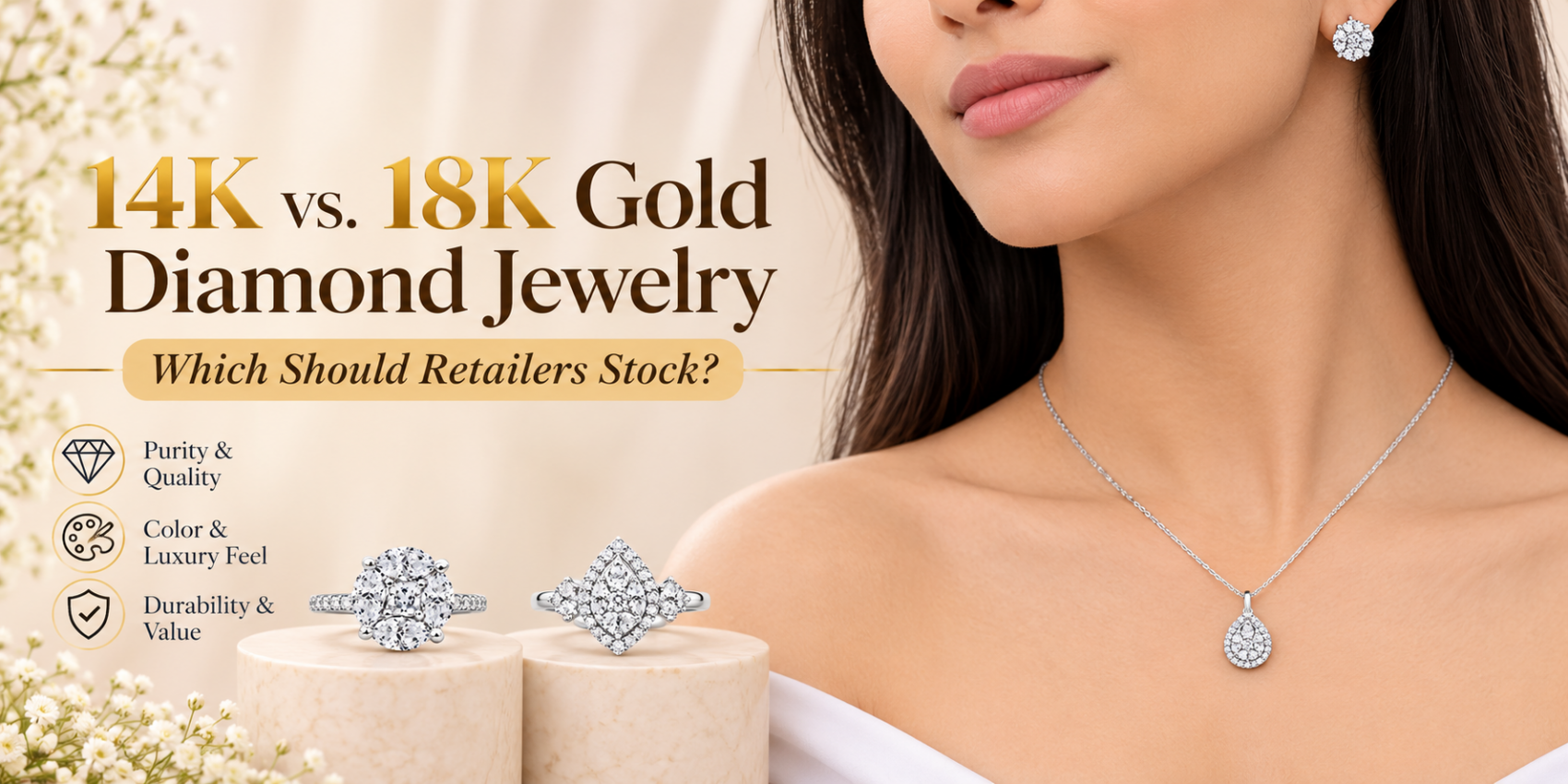
14K vs. 18K Gold Diamond Jewelry: Which Should Retailers Stock?
Few buying decisions shape a jewelry case as much as karat. With gold near record highs in 2026, the choice between 14K and 18K affects your margins, return rates, and the story your sales team can tell.
For diamond jewelry, where customers are paying for quality, the answer increasingly leans toward 18K, with 14K playing a supporting role. This guide explains why, and how to build the right mix.
Quick Answer: 14K or 18K for Retail?
Stock 18K as your premium diamond tier and 14K as your accessible entry point. 18K offers richer color, higher gold content, and a luxury feel that suits fine diamonds, while 14K offers added durability and lower price points. Diamond-focused stores can weight their assortment toward 18K, then use 14K to widen the price range.
14K vs. 18K Gold: The Core Differences Purity
14K gold is 58.3% pure gold (stamped 585 in Europe), while 18K is 75% pure (stamped 750). The remainder is alloy metals such as copper, silver, or zinc.
Color
18K has a deeper, warmer tone, while 14K looks slightly paler. Many jewelers say 18K delivers whiter whites and richer yellows, which is why it is popular for diamond settings.
Durability
Higher alloy content makes 14K harder and more scratch-resistant, which suits daily-wear pieces. 18K is softer, but it performs well in fine jewelry with secure settings and proper care.
Why 18K Is Gaining Ground in Diamond Jewelry
Diamonds are lasting purchases, and shoppers expect the metal to match. In a JCK retailer panel survey, 38% of jewelers said they stock and sell more 18K than five years ago, compared with 17.9% for 14K. In bridal, the gap was wider: 43.3% versus 12.9%. Designers also lean toward 18K for its rich look and workability, which shows off fine detail. For retailers who want distinctive silhouettes, working with a designer jewelry manufacturer gives you collections competitors cannot easily replicate.
Where 14K Still Wins
14K remains the broadest U.S. standard. Retailers in the same survey reported it making up about 80% of their karat inventory, so it still anchors most stores.
It also uses about a fifth less pure gold than 18K, which helps price-sensitive shoppers and gift buyers. Sourcing dependable wholesale jewelry in 14K lets you protect margins on everyday pieces such as petite rings and studs.
How Rising Gold Prices Affect Your Buying Strategy
Retail jewelry prices follow the gold market, which puts pressure on shopper budgets and your open-to-buy. Practical responses include:
- Leading with 14K in high-ticket categories like diamond bracelets and larger earrings.
- Reserving 18K for hero pieces and bridal. Favoring petite, lightweight designs that deliver sparkle with less metal.
- Ordering in smaller, more frequent batches to limit price exposure.
Building Your Inventory Mix by Category
Because diamonds are a premium purchase, 18K works across most fine categories: earrings, necklaces, bracelets, bridal, and anniversary pieces. Reserve 14K for entry-level studs, pendants, and stackable petite rings, where comfort and price drive volume.
Customers searching for gold diamond pieces want a clear choice. Presenting wholesale diamond jewelry in both karats, with a simple explanation card at the counter, helps staff trade customers up without pressure.
Pairing Karat With Colored Gemstones
Gemstones change the equation. Emeralds, tourmaline, and sapphires look striking against 18K’s deep, rich tone, while 14K keeps colorful designs approachable. A well-planned wholesale gemstone jewelry assortment can use 18K for signature pieces and 14K for fashion-forward styles.
What to Look for in a Supplier
- 18K-led diamond range: premium pieces that justify higher price points
- Both karats per collection: entry and premium tiers of the same design
- Natural, ethically sourced diamonds with transparent specifications
- Reliable hallmarking and quality control
- Giftable, trend-relevant collections such as zodiac, birthstone, petite, and Art Deco
- U.S. market focus: dependable shipping and a presence at shows like JCK, JA New York, and JIS
Rekiya Designs, for example, handcrafts its diamond, zodiac, birthstone, petite, Art Deco, and gemstone collections in solid 14K and 18K gold, with a strong focus on 18K diamond jewelry. It also exhibits at major U.S. trade shows, so buyers can compare finished pieces in person.
Your 14K vs. 18K Buying Plan
Build your diamond assortment around 18K for premium, bridal, and gifting demand, then add 14K to cover entry-level and everyday buyers. Review sell-throughs each quarter, shift the ratio toward what your customers actually buy, and choose a supplier that offers both karats in every collection.
Frequently Asked Questions
Stock both, but lead with 18K for diamond pieces. 18K works well as your premium tier because of its richer color, higher gold content, and luxury feel, which suit fine diamonds. 14K works best as your accessible entry point, widening your price range and appealing to everyday and gift buyers.
14K gold is 58.3% pure (stamped 585), while 18K is 75% pure (stamped 750), with the rest made up of alloy metals like copper, silver, or zinc. 18K has a deeper, warmer tone and shows off diamonds beautifully, while 14K is slightly paler but harder and more scratch-resistant, making it a good fit for daily wear.
Look for a supplier with an 18K-led diamond range, both karats offered in every collection, natural and ethically sourced diamonds with transparent specifications, and reliable hallmarking and quality control. Trend-relevant, giftable collections (zodiac, birthstone, petite, Art Deco) and a U.S. market focus, including a presence at shows like JCK, JA New York, and JIS, are also valuable.
Because retail prices follow the gold market, higher prices put pressure on both shopper budgets and your open-to-buy. To manage this, lead with 14K in high-ticket categories like diamond bracelets and larger earrings, reserve 18K for hero pieces and bridal, favor petite, lightweight designs that use less metal, and order in smaller, more frequent batches to limit price exposure.
-
How to Find a Reliable Wholesale Jewelry Supplier in the USA: A Retailer’s Guide
September 29th, 2026 -
 August 22nd, 2026
-
 August 22nd, 2026
-
 July 9th, 2026